

Student Research
Some of our physics students and majors participate in research projects. (* indicates student)
- Refining Orbits of Bright Binary Systems. Miroshnichenko A.S., Danford S., Andronov I.L., Aarnio A.N., Lauer D., *Buroughs H. (2023) Galaxies, 11 (1), Article #8.
- Exploring Hysteresis and Spontaneous Symmetry Breaking in a Rotating Fluid. Ian Beatty, Pearson Hart* (2019)
- Can Grandeur Overcome Insecurity? Investigating the Impact of Introductory Astronomy Course Elements on Students Self-Efficacy. Alicia Aarnio, Ian Beatty, Lindsay House* (2019)
- Experimental Investigation of Spontaneous Polygon Formation in a Rotating Fluid. Ian Beatty, Kirby Schmidt* (2018)
- Noise-aided Logic in an Electronic Analog of Synthetic Genetic Networks. E.H. Hellen, S.K. Dana, J. Kurths, E. Kehler*, and S. Sinha. PLOS ONE (2013). 10.1371/journal.pone.0076032
- Prediction and Measurement of Transient Responses of First Difference based Chaos Control for 1-dimensional Maps. E.H. Hellen and J.K. Thomas*. http://arxiv.org/abs/0807.2637
- Modeling Excitable Systems: Reentrant Tachycardia. J.L. Lancaster*, E.M. Leise, and E.H. Hellen. Am. J. Phys. 78, 56(2010).
- Nonlinear damping of the LC circuit using antiparallel diodes. E.H. Hellen and M.J. Lanctot*. Am. J. Phys. 75, 326(2007).
| The Chaotic Lorenz Attractor | Chaotic Cubic Return Map |
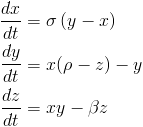 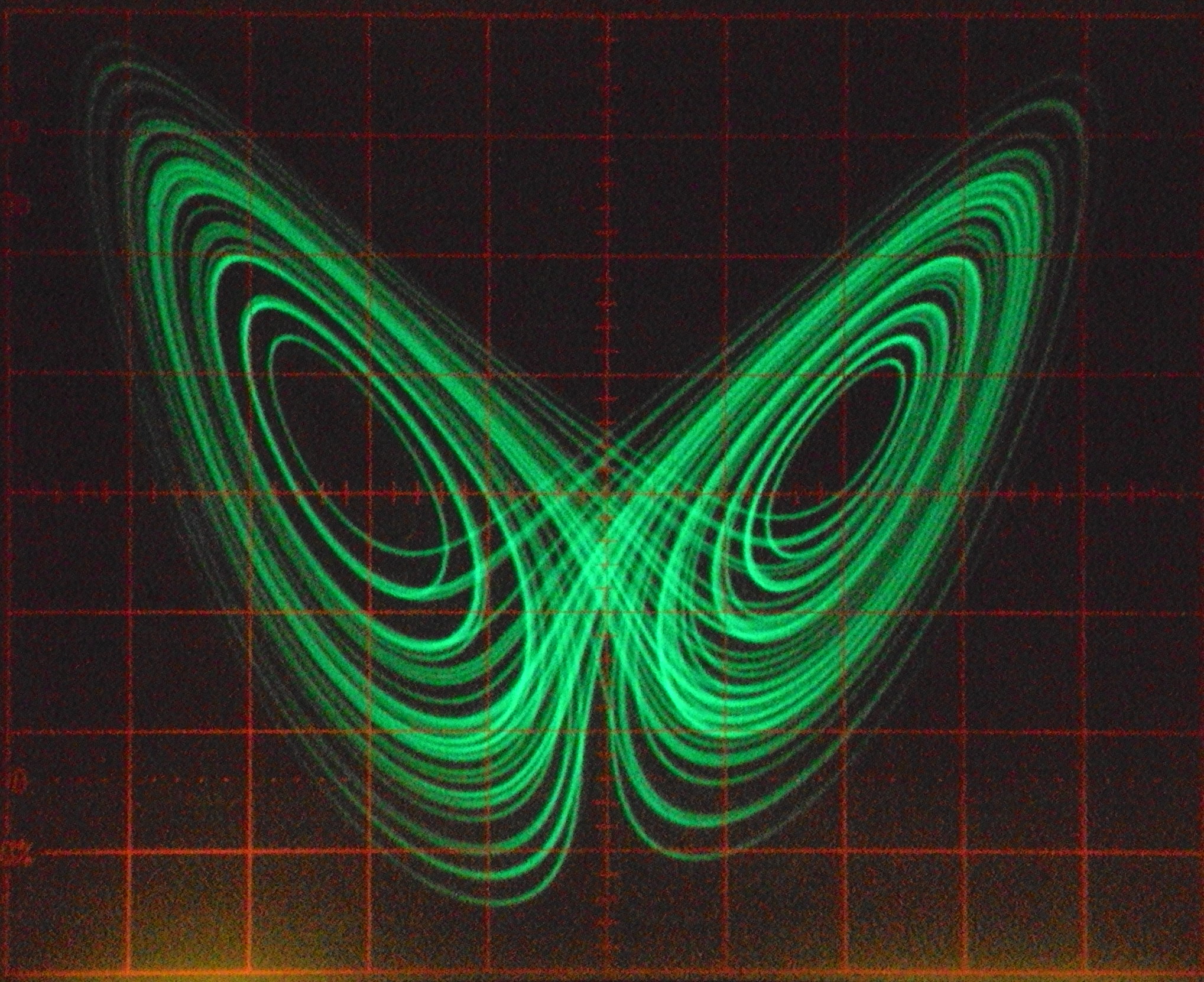 |  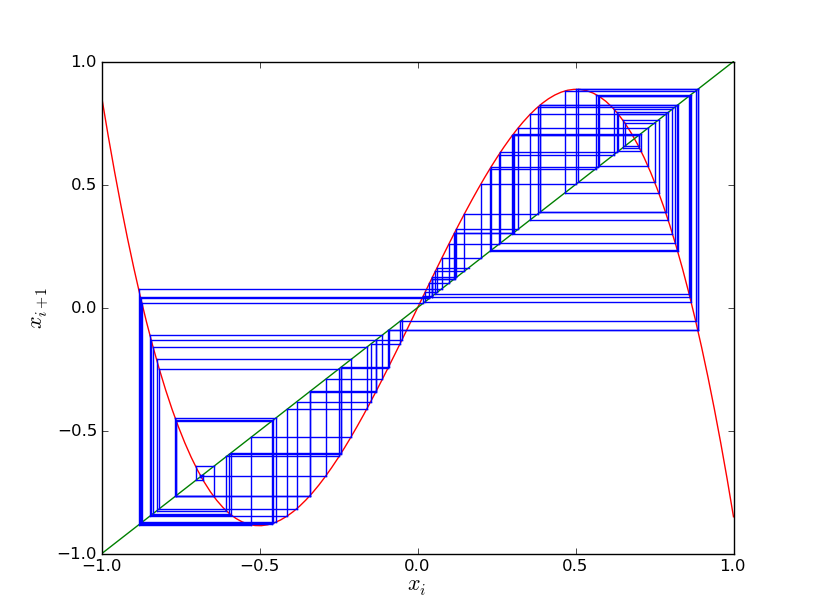 |
| Coupled Oscillators Map | Hénon Circuit Bifurcation Diagram |
 |  |
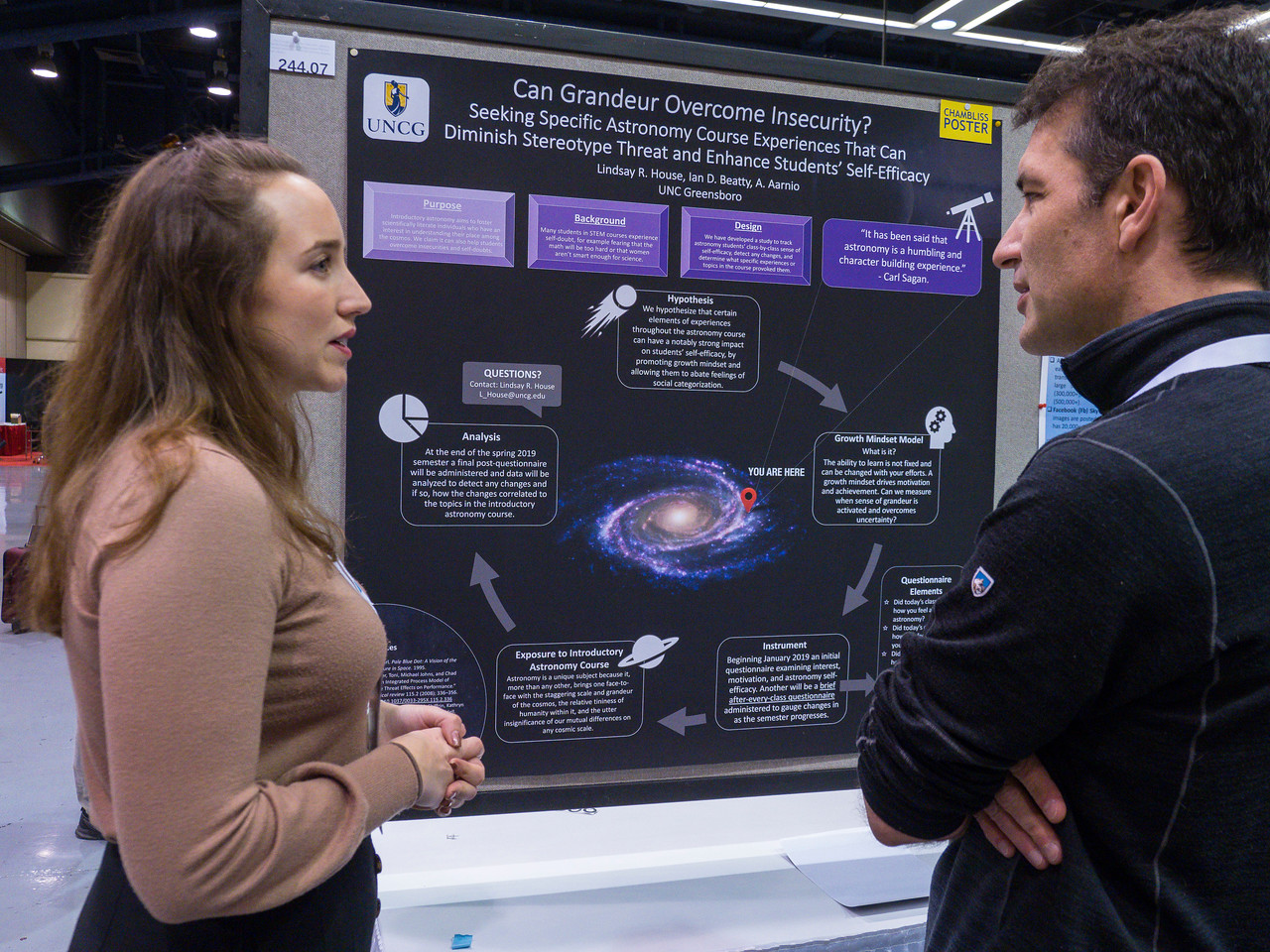
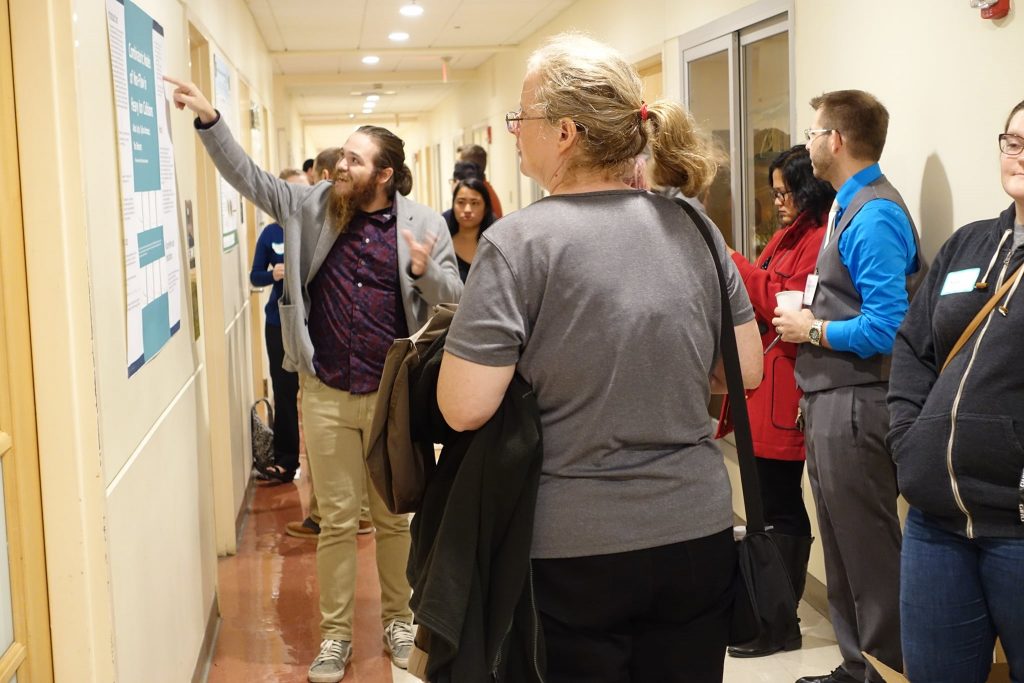
Recent majors presented their research at conferences and meetings including:
- Physics Education Research Conference (PERC)
- Thomas Undergraduate Research and Creativity Expo
- American Astronomical Society Meetings
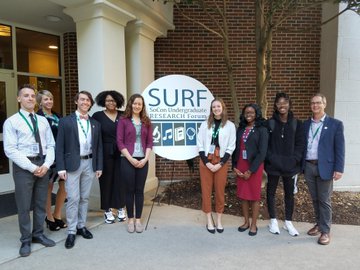
- SoCon Undergraduate Research Forum
UNCG-Stars Research Group
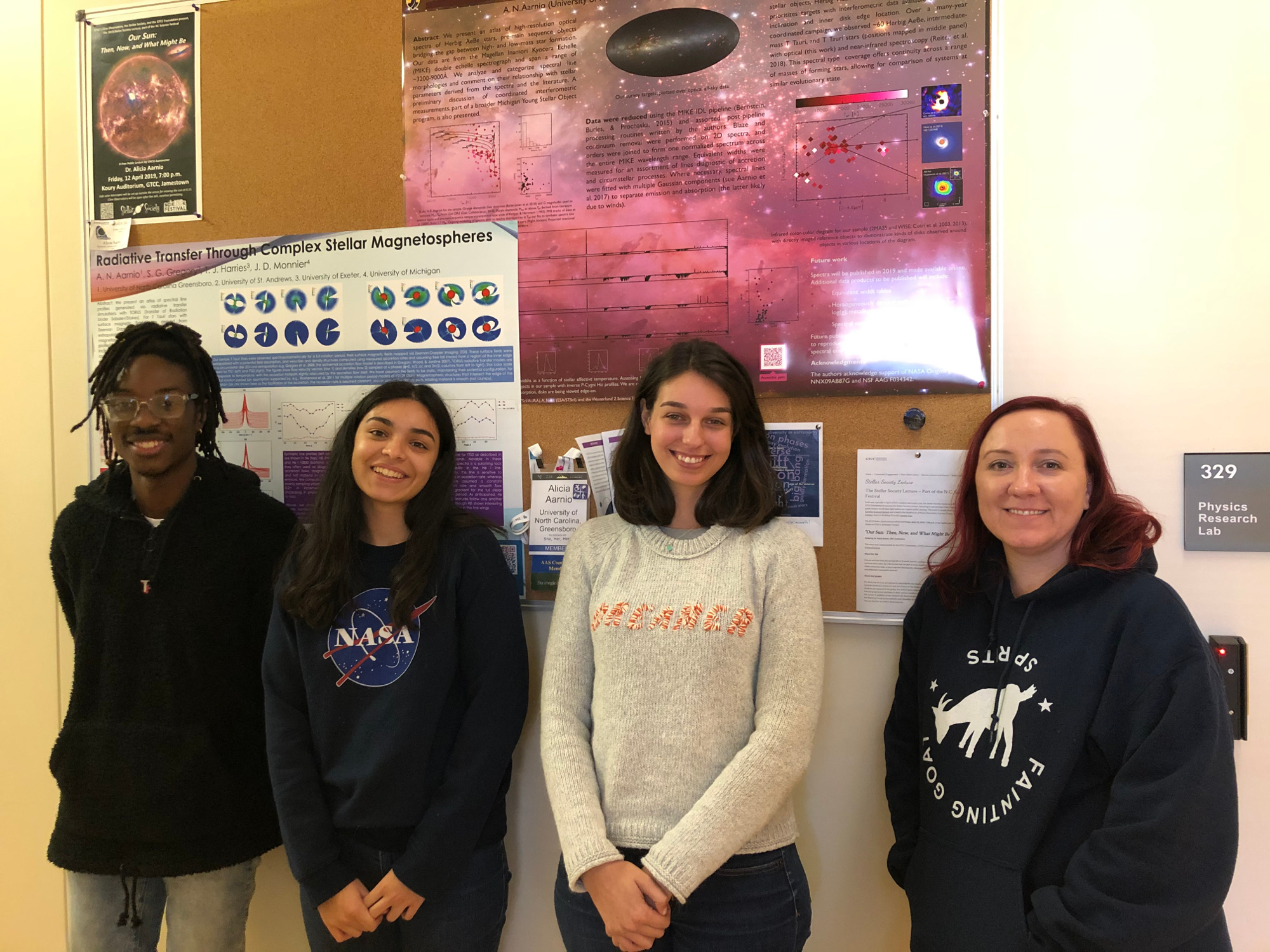
Dr. Alicia Aarnio’s research group (shown with former members Kamara Culbreath, Madison Arnel, and Mariann Juarez) learn topics such as modeling spectral energy distributions of young stars, chemistry in planet-forming discs, and spectroscopy of a galaxy that is forming stars at an unusually high rate.
SIISP Project: Self-Efficacy Intervention to Improve STEM Performance
Self-efficacy is a psychosocial construct that strongly correlates with academic success. Research shows that it is a stronger predictor of student performance than traits in the purely cognitive domain, and that the students most likely to drop out of STEM disciplines-and therefore most in need of assistance-benefit least from interventions that merely improve pedagogy or curriculum. Unfortunately, the tools currently available for improving university students’ self-efficacy are badly lacking. One difficulty is that extant interventions are resource-intensive and hard to replicate; another is that they are highly domain-specific. No practical, replicable interventions exist that educators can use to increase university-level students’ self-efficacy across the STEM domain. Another challenge is that despite promising developments, the theory needed to guide research and development in this arena remains incomplete. The SIISP project seeks to remedy these difficulties by developing, testing, documenting, and disseminating a practical self-efficacy intervention, along with analysis of what it reveals about the factors at play in the interactions between students’ self-efficacy and academic performance.
The SIISP intervention will improve university STEM students’ academic performance by targeting two critical elements of self-efficacy: students’ belief that intelligence is growable rather than fixed (a.k.a. “mindset”), and their inclination to attribute their successes and failures to internal rather than external factors. The project unifies and develops three heretofore separate lines of research: work on students’ attributions and “attributional retraining,” work on “mindset” about fixed vs. growable intelligence, and work on the generality vs. domain-specificity of self-efficacy interventions.
Intellectual Merit: Although the research base on the importance of attributions and mindset are strong, separately, these two constructs have not been unified into a coherent approach to self-efficacy improvement. Interventions of demonstrated efficacy exist for each, but no intervention exists that addresses both, and the extant interventions are not yet suitable for practical use in university-level STEM teaching. The SIISP project integrates two promising theoretical ideas and their corresponding interventions while bringing them into the context of university-level STEM instruction.
Broader Impacts: The project will directly impact and benefit at least 440 STEM majors at UNCG and NCA&T, many of them female and/or under-represented minorities. In addition, the intervention developed will be documented and packaged for dissemination, allowing similar impacts at other institutions. If the project succeeds at developing an effective mechanism for enhancing STEM students’ self-efficacy and academic success, as expected, the ultimate impact on STEM students across the country-especially for under-represented groups-could be tremendous.
Project team
Principal investigators: Dr. Stephanie Sedberry-Carrino, Prof. William Gerace, Prof. Ian Beatty, Prof. Michael Kane (Psychology).
Graduate research assistant: Maha Elobeid (Educational Leadership & Cultural Foundations)
Former graduate research assistants: Dr. Jason Strickhouser (Psychology), Stehpanie Hudson (Educational Leadership & Cultural Foundations), Christine Bottini (Mathematics & Statistics).
News & Updates
- Campus Weekly Announcement, September 2016
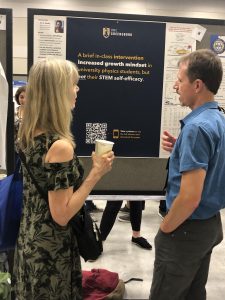
- Dr. Ian Beatty and Dr. Stephanie Sedberry presented at PERC 2019 and the AAPT Summer 19 conferences
Results
- Critical Issues, PERC 2019
- Intervention Videos
This material is based upon work supported by the U.S. National Science Foundation under Grant No. DUE-1612053. Any opinions, findings, and conclusions or recommendations expressed in this material are those of the author(s) and do not necessarily reflect the views of the National Science Foundation.